Home / Basement Waterproofing / Crawl Space Waterproofing
Crawl Space Moisture & Waterproofing in Kansas City, KS
A damp crawl space does not stay in the crawl space. The air, the smell, and the moisture problems move up into the house. We dry it out and keep it that way.
Why a crawl space stays wet
Humid outside air and bare soil keep a vented crawl space damp, and that air moves up into the house.
Signs of a crawl space moisture problem
You may never go under the house, but you can usually tell there is a problem:
- A musty smell in the rooms above, especially on the first floor
- Humid, sticky air upstairs that the AC struggles with
- Cupping or gapping hardwood floors above the crawl space
- Standing water or wet mud under the house after rain
- Rusty ductwork, sagging insulation, or mold on the floor joists
- Cold floors in winter and higher heating bills
Around half the air on your first floor comes up from the crawl space. Whatever is happening down there, you are breathing part of it.
Why crawl spaces get wet
Most crawl spaces have a dirt floor and open vents. Humid outside air comes in through the vents, hits the cooler surfaces under the house, and condenses. On top of that, moisture wicks up out of the bare soil around the clock, and any grading or drainage problem outside sends water straight in.
The old idea that vents dry a crawl space out has not held up. In a humid climate, open vents usually make it wetter.
Encapsulation and drainage
We seal the crawl space off from the ground and the outside air. A heavy vapor barrier covers the floor and runs up the walls, the vents are sealed, and standing-water problems get a drain and a dedicated crawl space pump. A conditioning dehumidifier keeps the humidity in check.
- Reinforced vapor barrier over the floor and up the walls
- Sealed vents and a sealed access door
- Interior drain and crawl space sump pump where water collects
- Dedicated dehumidifier to hold humidity down
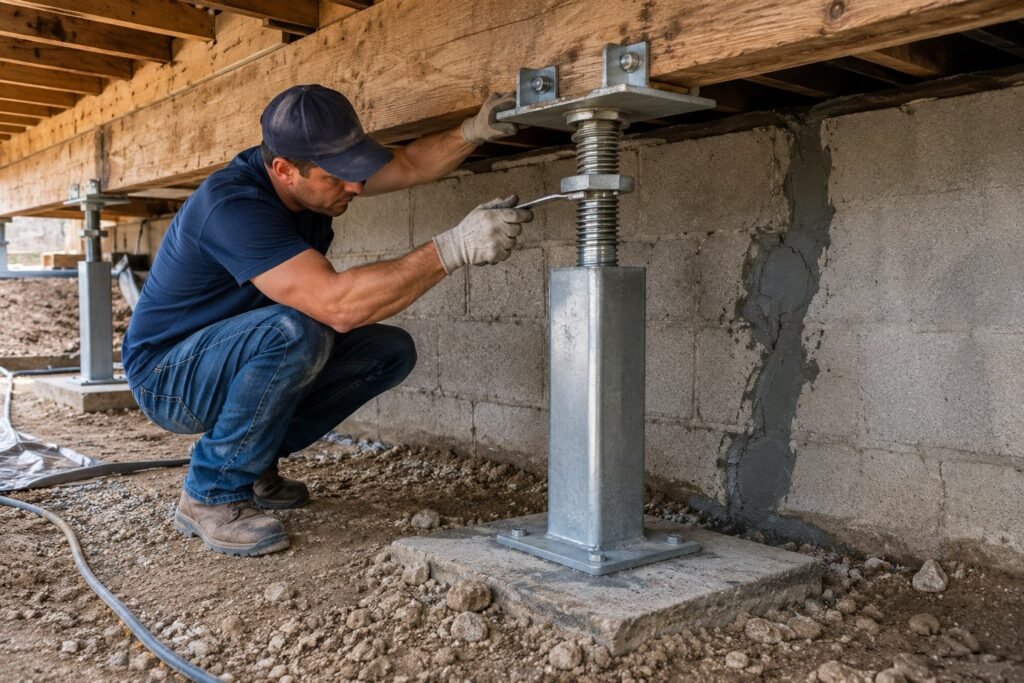
- Insulation and support repairs where needed
What crawl space work includes
Vapor barrier / encapsulation
A sealed liner that stops soil moisture and separates the crawl space from the damp ground.
Drainage and pump
For crawl spaces that take on water, a perimeter drain and a dedicated sump keep it dry.
Dehumidification
A unit sized for the space keeps relative humidity in the range that stops mold and wood damage.
How the process works
1. Book a visit
Call or send the form and we set a time to come out.
2. Inspection
We get under the house, check for water, wood damage, support issues, and see where outside water is entering.
3. Written plan
A clear explanation, the recommended fix, options, and a written price. No pressure.
4. The work
Most crawl space encapsulations are one to three days depending on size and how much cleanup and repair is needed first.
What crawl space waterproofing costs
Cost is mostly about square footage and how much has to happen before the liner goes in:
- Square footage of the crawl space
- Debris removal, old insulation removal, and any mold cleanup first
- Whether a drain and pump are needed or just a vapor barrier
- A dehumidifier and its drain line
- Support repairs, new insulation, or duct sealing done at the same time
A basic vapor barrier is modest. A full encapsulation with drainage and a dehumidifier is a larger project, and it pays back in comfort, air quality, and energy use.
Common questions
How much does crawl space encapsulation cost in Kansas City?
Should crawl space vents be open or closed?
Will encapsulation get rid of the musty smell upstairs?
Do I need a dehumidifier in the crawl space?
Can a wet crawl space affect my floors?
My crawl space floods when it rains. Is a vapor barrier enough?
Related services and reading
Serving Kansas City and the Kansas suburbs
We work throughout Kansas City, KS and the surrounding Kansas communities in Wyandotte, Johnson, and Leavenworth counties.
Dry out the crawl space
Free inspection under the house and a written plan to stop the moisture at the source.