Home / Basement Waterproofing
Basement Waterproofing in Kansas City, KS
Water on the floor after a storm, damp walls, a musty smell that will not go away. We find where the water is getting in and put together a plan to keep it out for good.
On-site inspection and written estimate
Common water entry points we check
Kansas cities served across the metro
Same crew, not a national franchise
How water gets into a Kansas City basement
Water almost never comes through solid concrete. It comes through openings, and it gets there because the clay soil around your foundation fills with water it cannot drain away.
Signs of water intrusion
- Water on the floor or pooling in low spots after heavy rain or snowmelt
- Damp or wet patches on the walls, especially near the floor or in corners
- A white, chalky residue on the block or concrete (efflorescence) left as water evaporates
- A musty, earthy smell, or visible mold on stored boxes, wood, or drywall
- Peeling paint, bubbling floor paint, or rust on the bottom of steel posts and appliances
- A sump pump that runs constantly, or one that has stopped working
- Condensation and high humidity that never really clears
You do not need standing water to have a problem. Ongoing damp and humidity damage framing and finishes and feed mold over time.
Foundation cracks that leak
When a specific crack is the entry point, we seal it full-depth with a polyurethane injection that stays flexible as the wall moves with the seasons. If water is coming in at several points or along the cove joint, a single crack repair will not solve it, and an interior drainage system makes more sense.
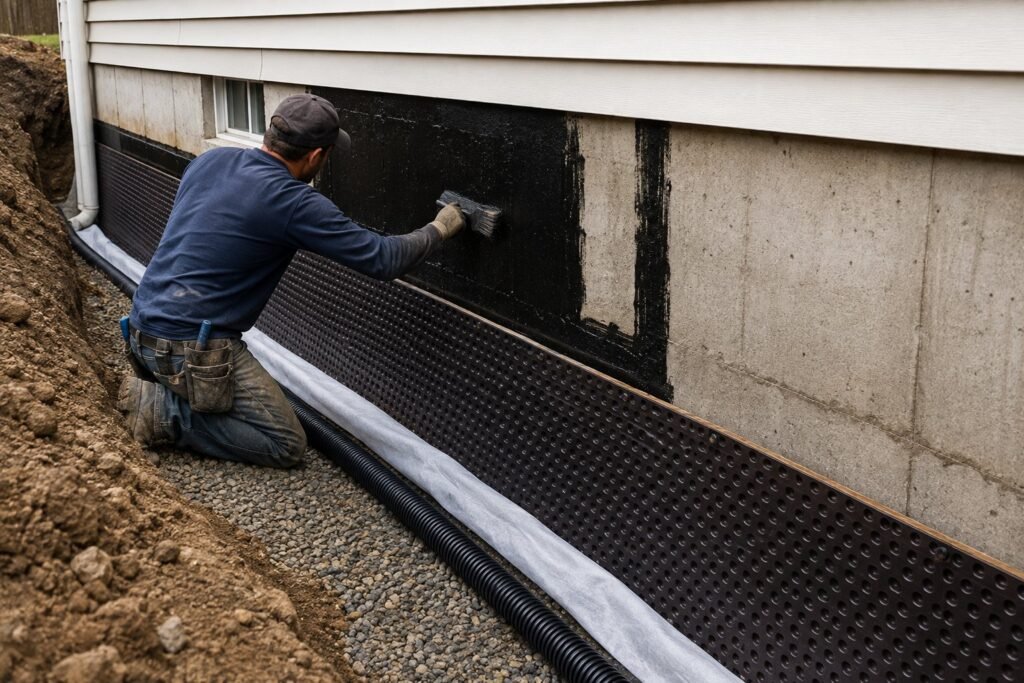
Two ways to keep a basement dry
Both approaches work. They differ in how they do it, what they cost, and how much they disrupt your yard and finished space.
Basement waterproofing methods compared
| Method | Best for | What it involves | Relative cost |
|---|---|---|---|
| Crack injection | A single, identifiable leaking crack | Full-depth polyurethane injection from the inside | Low |
| Interior drain system | Cove-joint leaks or several entry points | Sub-slab perimeter drain, wall vapor barrier, sump pump | Medium (priced per linear foot) |
| Exterior waterproofing | A deteriorating wall, or during other excavation | Excavate to the footing, membrane, drain board, new footing drain | High |
| Sump pump + battery backup | Homes that take on water during storms | Sealed pit, primary pump, backup pump on a battery | Low to medium |
| Drainage and grading | Water pooling against the foundation outside | Downspout extensions, regrading, French drains | Low - often the first fix |
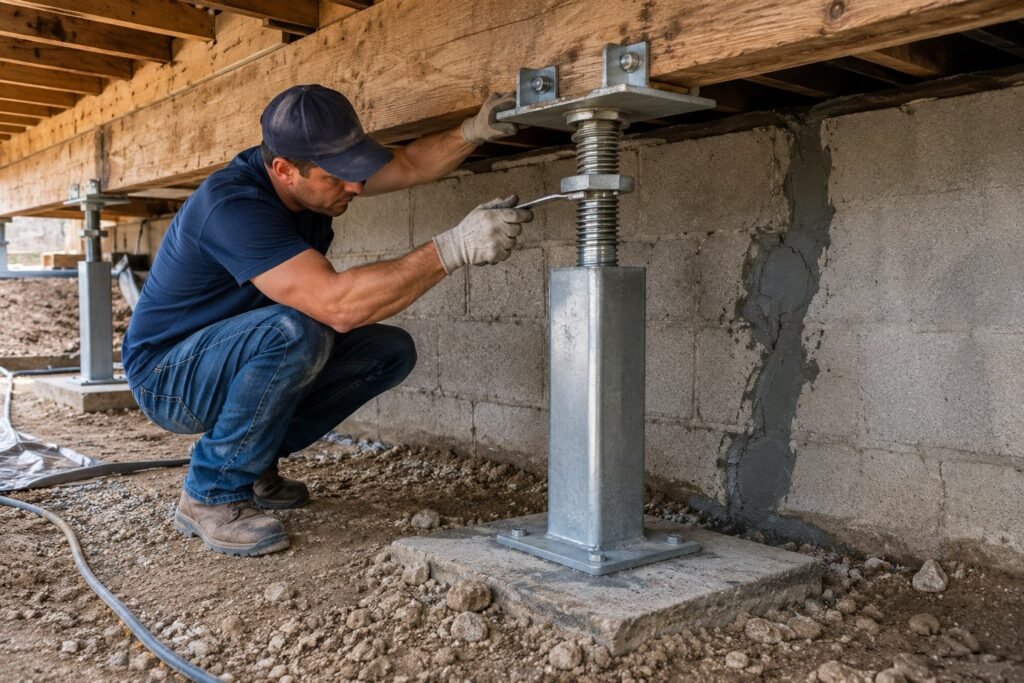
Sump pump installation and battery backups
The sump pump is what actually gets collected water out of the house. We install a properly sized primary pump in a sealed pit, and for homes that flood in outages we add a battery backup pump that keeps working when the power is out during a storm.
Drainage around the foundation
A lot of wet basements improve once the water outside is handled. We look at where your downspouts end, how the ground slopes for the first ten feet around the house, and whether a French drain would move surface water away. Fixing drainage is usually the cheapest thing you can do, and sometimes it is enough on its own.
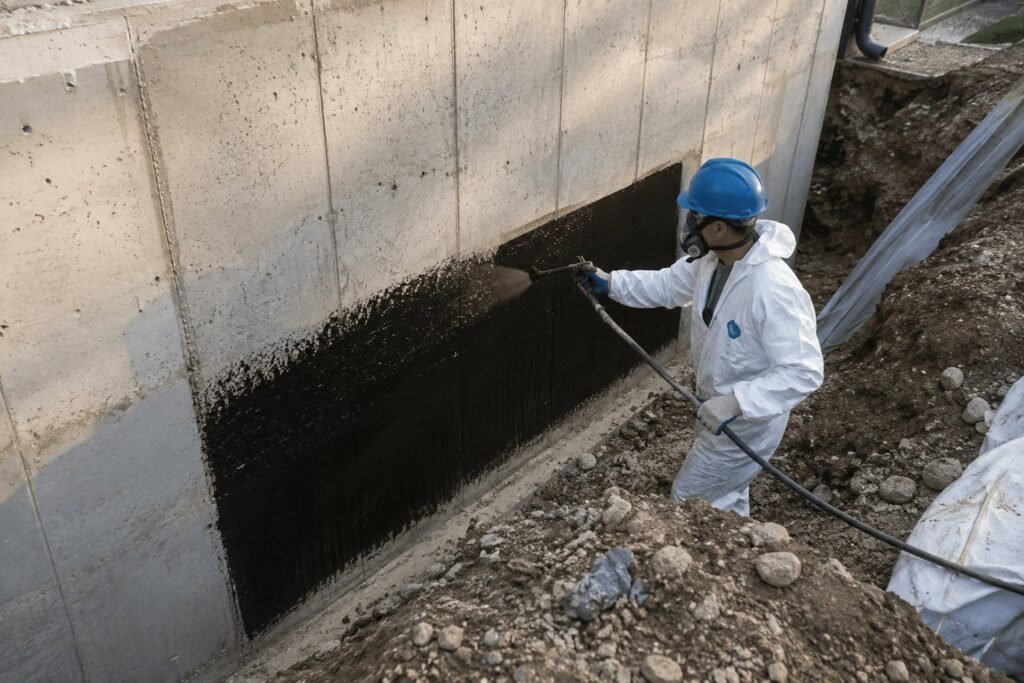
The basement waterproofing process
What affects basement waterproofing cost
- One crack vs. cove-joint or multi-point leaking
- Linear feet of perimeter drain and the number of sump pits
- Whether a battery backup pump is added
- Concrete to cut and replace along the perimeter
- Exterior drainage, window well work, or grading done at the same time
Basement waterproofing questions Kansas City homeowners ask
How much does basement waterproofing cost in Kansas City?
Do I need interior or exterior waterproofing?
Will waterproof paint fix my basement leak?
Why does my basement only leak during heavy rain?
How long does basement waterproofing last?
Can you waterproof a finished basement without tearing it out?
My basement smells musty but I do not see water. Is that a problem?
Do you install battery backup sump pumps?
Basement waterproofing across the Kansas suburbs
We waterproof basements and crawl spaces throughout Kansas City, KS and the surrounding Kansas communities.
Get your basement looked at before the next storm
Free inspection and a written plan to keep water out. Talk to a specialist today.