
How to Read Foundation Cracks: A Visual Guide
The direction and location of a crack tell you what is causing it. Vertical cracks are usually shrinkage or minor settlement. Diagonal cracks point to differential settlement. Horizontal cracks mean lateral soil pressure. Stair-step cracks in block or brick mean one section is moving against another. Width and growth over time tell you how urgent it is.
Short answer
The direction and location of a crack tell you what is causing it. Vertical cracks are usually shrinkage or minor settlement. Diagonal cracks point to differential settlement. Horizontal cracks mean lateral soil pressure. Stair-step cracks in block or brick mean one section is moving against another. Width and growth over time tell you how urgent it is.
Vertical Cracks
Thin vertical cracks in poured concrete are the most common and usually come from concrete shrinkage as it cured. They are often cosmetic, but they can still leak, so sealing them keeps water out even when no structural repair is needed.
Diagonal Cracks
Cracks running at roughly 45 degrees, especially from the corners of doors and windows, indicate one part of the foundation has moved relative to another. That is differential settlement, and it is worth measuring to see whether it is still active.
Horizontal Cracks
A horizontal crack across a basement wall is the one to take most seriously. It means soil pressure is pushing the wall inward. In block walls the wall often bows along the crack; in poured walls it may tilt in at the top. These deserve prompt inspection.
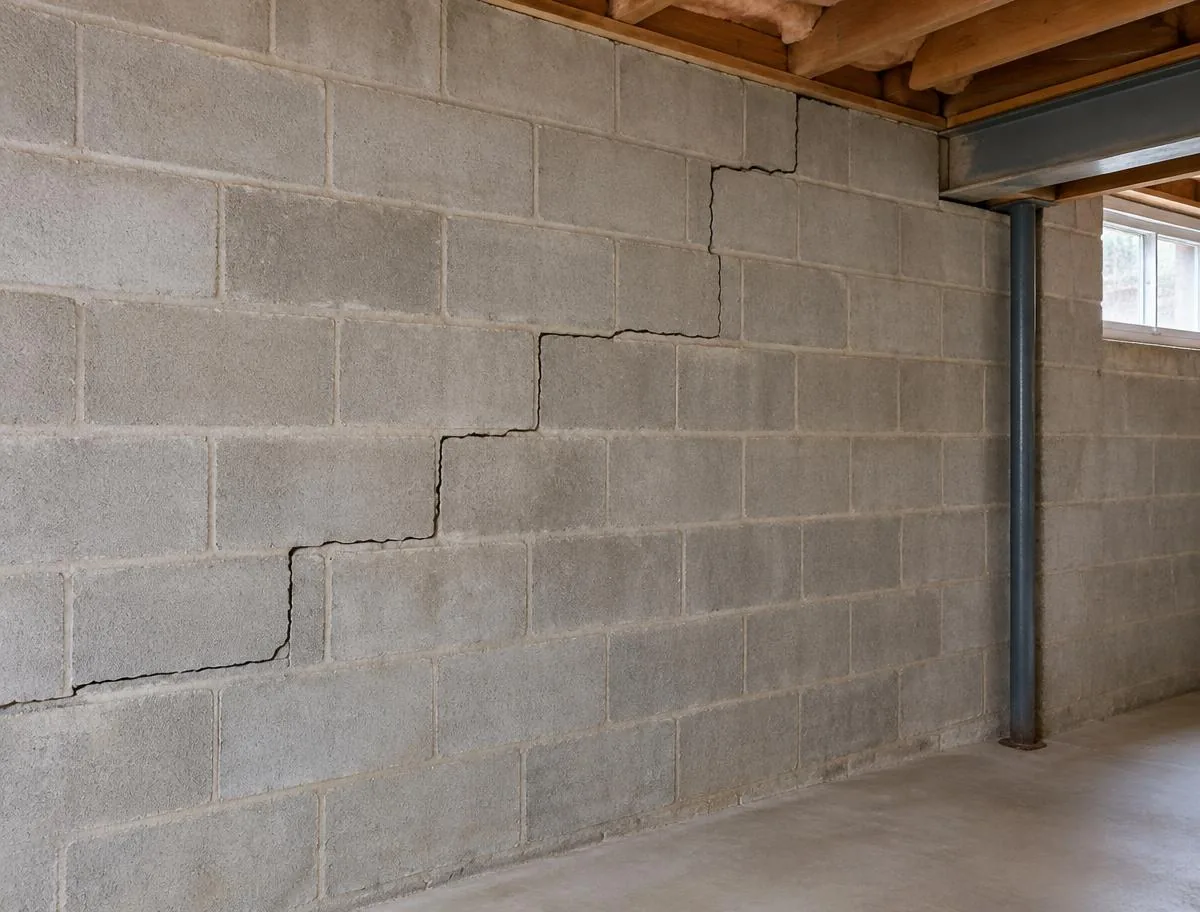
Stair-Step Cracks
Cracks that step along mortar joints in block or brick follow the weakest path through the wall. They usually mean settlement or soil pressure and are common in the older masonry foundations found across the Kansas-side metro.
When to get help
Photograph cracks with a coin or ruler for scale and date the photos. If a crack is horizontal, stair-stepped, wider than a quarter inch, leaking, or growing between photos, schedule an inspection.
Related service: Foundation Crack Repair in Kansas City, KS
Want a straight answer about your home?
Request contact with an independent provider and ask for photos, measurements, and written recommendations. Confirm inspection fees before booking.
Concerned About Your Foundation?
Request an inspection referral and find out what’s causing the problem.
Independent provider referral request
Your request is used to arrange provider contact